Event security
Building safety into the guest experience
Why early planning and good communication matter as much as the number of officers on site.
Why early planning and good communication matter as much as the number of officers on site.
Safety begins before the gates open
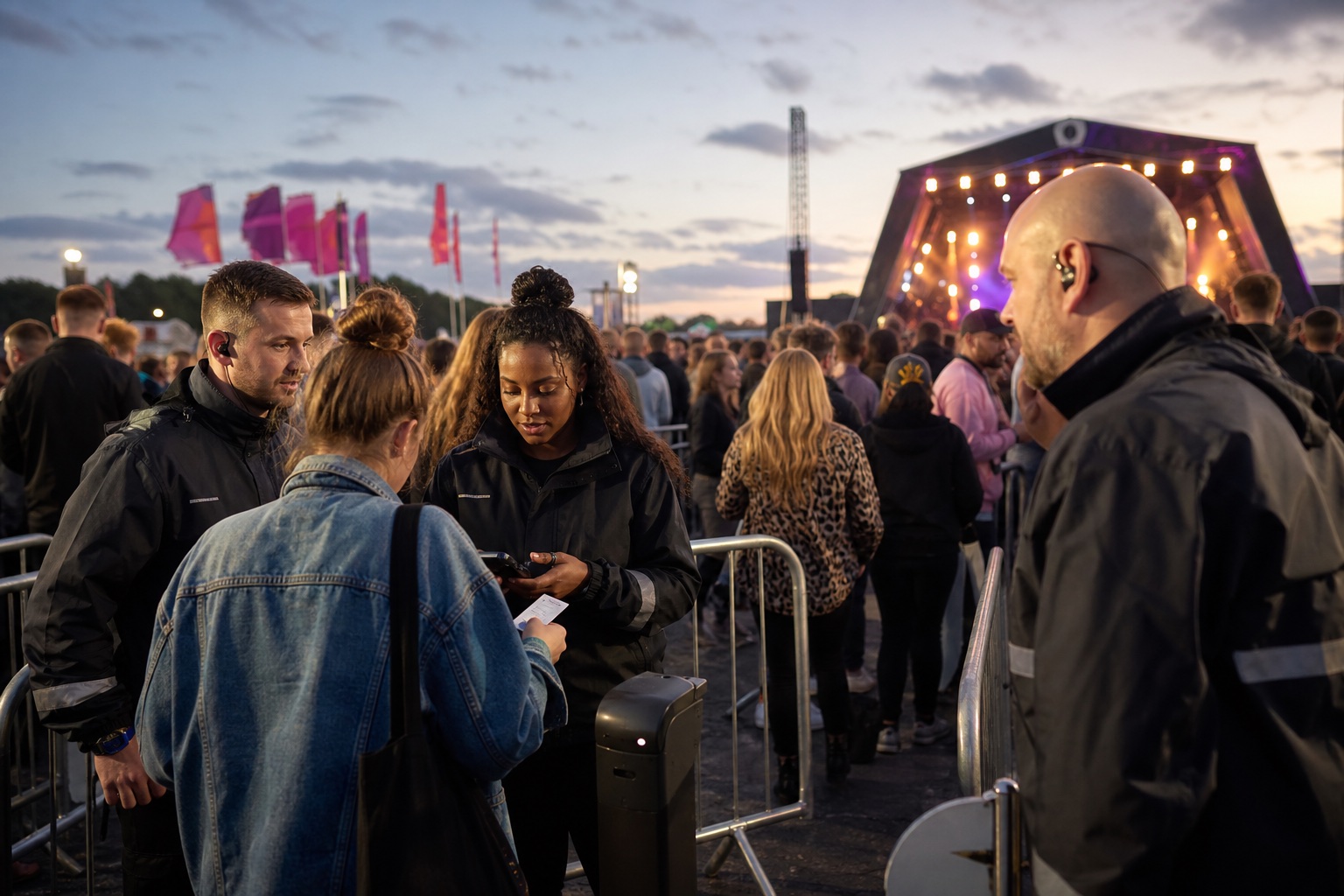
Guests rarely separate security from the rest of an event experience. The queue, welcome, ticket check, search process and first interaction with staff all shape how organised and reassuring the occasion feels. Effective event security protects people and restricted areas while helping movement remain calm. That balance begins in the planning stage, not when the doors open.
Map the complete guest journey
Start by mapping the guest journey. Consider transport arrival points, queues, ticket or accreditation checks, entrances, circulation routes, bars, toilets, viewing areas and exits. Each location creates different pressures at different times. A deployment based only on total attendance can miss short periods of intense demand, such as the opening rush, a headline performance or the final departure.
Match people to licensed roles
Roles must be matched to the task. Licensed security personnel may be required for searches, refusal of entry, restricted-area protection and response to disorder, while stewards can support information, wayfinding and audience movement. Supervisors need a clear span of control, and every person should understand who can make decisions when the situation changes.
Build a clear communications structure
Communication is the structure that connects those roles. Briefings should cover radio channels, call signs, escalation language, lost children or vulnerable guests, medical support, evacuation routes and liaison with organisers or emergency services. Short, accurate messages help a control point build a reliable picture and move resources before a minor problem becomes disruptive.
Make professionalism part of security
Professional interaction is also a security measure. Calm explanations, consistent admissions policies and respectful de-escalation reduce frustration at busy entrances. Officers who remain observant while appearing approachable are more likely to receive useful information from guests and venue staff. Firm boundaries are still essential, but they can be applied without creating unnecessary confrontation.
Plan for welfare and crowd pressure
Plans should account for welfare as well as deliberate threats. Crowd density, heat, weather, intoxication, fatigue and separated groups can all generate incidents. Teams need to recognise early warning signs, protect access for medical staff and understand when an area should be slowed, paused or redirected. Good observation across the venue supports both safety and the continuity of the event.
Protect the atmosphere as well as the venue
When security is integrated properly, guests experience confidence rather than restriction. The visible team knows the venue, communicates consistently and acts proportionately from first arrival to final exit. Yorkshire Fortress Security can support risk review, role-based deployment, supervisor structure and post-event reporting for private functions, live entertainment, community occasions and larger public events.
Ready to review your security plan?
Tell us about your site, operating hours and current concerns. Our team can help turn the guidance in this article into a proportionate working plan.
Talk to our team